In today’s fast-paced and security-conscious world, businesses across many industries depend on professional security services to function safely and efficiently. Security guards are no longer viewed as optional or secondary support—they are a core part of daily operations. From protecting employees and assets to controlling access and preventing disruptions, security guards play a critical role in keeping industries running smoothly.
As businesses grow and risks evolve, the demand for trained security professionals continues to rise. Many industries now rely on security guards not only for protection, but also for organization, compliance, and peace of mind. Below, we explore the major industries that depend on security guards every day and why their presence is essential to operational success.
Manufacturing and Industrial Facilities
Manufacturing plants, factories, and industrial facilities are among the most security-dependent environments. These locations often contain expensive machinery, valuable raw materials, proprietary processes, and large workforces operating across multiple shifts.
Industrial Security Guards are essential in these environments to maintain order, monitor access points, and protect critical infrastructure. Security guards help prevent unauthorized entry, theft of materials, sabotage, and workplace disruptions. They also support safety by ensuring only authorized personnel access restricted or hazardous areas.
Industrial facilities frequently operate overnight and on weekends, which increases vulnerability. Security guards provide continuous monitoring, perimeter patrols, and rapid response to alarms or incidents. Their presence helps reduce downtime, protect investments, and ensure compliance with safety regulations.
Warehouses and Distribution Centers
Warehouses and distribution centers play a vital role in supply chains, storing inventory and managing shipments for businesses of all sizes. These facilities often handle high volumes of goods and operate around the clock, making them a prime target for theft and unauthorized access.
Security guards in warehouse environments manage access control, monitor loading docks, and patrol storage areas. They help prevent inventory loss, protect vehicles and equipment, and ensure shipments remain secure. Guards also assist with monitoring employee entry and exit, which helps reduce internal shrinkage.
For large warehouses, mobile patrols combined with on-site guards provide comprehensive coverage, ensuring that no area is left unmonitored.
Construction and Development Projects
Construction sites rely heavily on security guards to protect valuable materials, tools, and equipment. These sites are often open environments with temporary fencing, making them especially vulnerable after hours.
Security guards prevent theft, vandalism, and trespassing, particularly during nights, weekends, and holidays. Their presence also reduces liability risks by keeping unauthorized individuals away from potentially dangerous areas.
Beyond loss prevention, construction security guards help manage site access, verify credentials, and maintain order among workers and vendors. This level of control supports safer, more organized job sites and helps projects stay on schedule.
Commercial Office Buildings
Office buildings house employees, executives, visitors, and sensitive information. Security guards are essential for maintaining a professional and secure work environment, especially in multi-tenant or high-traffic buildings.
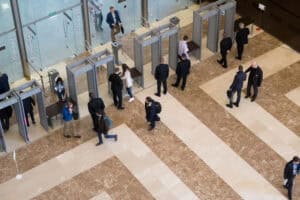
Guards often manage front desks and lobbies, monitor visitor access, and ensure that only authorized individuals enter the premises. They also conduct patrols, respond to emergencies, and assist with evacuations if needed.
In corporate environments, security guards contribute to employee confidence and productivity. When workers feel safe, they can focus on their responsibilities without distraction or concern.
Retail and Shopping Centers
Retail businesses depend on security guards to deter theft, protect customers and employees, and maintain order. Shopping centers, malls, and standalone stores face constant challenges such as shoplifting, loitering, and disruptive behavior.
Security guards provide visible deterrence, monitor sales floors and entrances, and respond quickly to incidents. Their presence alone can significantly reduce theft and vandalism. Guards also assist with crowd control during busy shopping seasons, promotions, and special events.
For large retail complexes, patrol services help cover parking lots and exterior areas, improving overall safety for customers and staff.
Healthcare Facilities
Hospitals, clinics, and medical centers operate in high-stress environments where safety and control are critical. Healthcare facilities rely on security guards to manage access, protect patients and staff, and respond to emergencies.
Security guards assist with visitor screening, monitor sensitive areas, and handle disturbances calmly and professionally. They often work closely with medical staff to ensure a safe and supportive environment for patient care.
In emergency rooms and behavioral health units, trained security guards are especially important for de-escalation and maintaining safety during tense situations.
Educational Institutions
Schools, colleges, and universities rely on security guards to create safe learning environments. Educational facilities often span large campuses with multiple buildings, making access control and monitoring essential.
Security guards help manage entrances, monitor student activity, and respond to incidents such as trespassing or emergencies. Their presence reassures students, staff, and parents while helping institutions maintain order and safety.
Guards also support special events such as sports games, graduations, and campus gatherings, where crowd control and security coordination are required.
Residential Communities and Property Management
Apartment complexes, gated communities, and residential developments rely on security guards to protect residents and maintain quality of life. Guards help deter crime, monitor visitor access, and patrol common areas.
Security guards in residential settings often act as both protectors and points of contact for residents. They assist with enforcing community rules, responding to disturbances, and reporting maintenance or safety issues.
Their presence improves resident satisfaction and can increase property value by creating a safer, more controlled environment.
Hospitality and Entertainment Venues
Hotels, resorts, event venues, and entertainment facilities depend on security guards to manage guest safety and protect property. These environments often involve high foot traffic, late-night activity, and valuable assets.
Security guards assist with access control, crowd management, and incident response. In hotels, they protect guests, staff, and facilities while maintaining a welcoming atmosphere. In entertainment venues, guards help prevent disruptions and ensure events run smoothly.
Professional security enhances guest experience by providing reassurance without interfering with enjoyment.
Transportation and Logistics
Transportation hubs such as parking facilities, logistics terminals, and fleet operations rely on security guards to protect vehicles, cargo, and personnel. These locations often operate continuously and face risks such as theft, vandalism, and unauthorized access.
Security guards monitor entrances, patrol lots, and oversee vehicle movement. Their presence helps ensure smooth operations and protects valuable assets throughout the transportation process.
Financial Institutions and High-Value Businesses
Banks, credit unions, and businesses handling large amounts of cash or sensitive data rely on security guards for strong deterrence and protection. Guards help prevent robbery, control access, and respond rapidly to emergencies.
In these environments, security guards must maintain high professionalism and awareness while supporting customer confidence and operational stability.
Why Security Guards Are Essential to Daily Operations
Across all these industries, security guards serve several core functions that directly support daily operations:
- Prevention: Visible security reduces crime and disruptions
- Control: Guards manage access, movement, and behavior
- Response: Immediate action during incidents or emergencies
- Support: Assistance to employees, customers, and visitors
- Accountability: Reporting and documentation for management
Security guards are not just reactive—they are proactive partners in operational success.
The Role of Industrial Security Guards in Modern Business
Among all security roles, Industrial Security Guards are especially critical due to the scale, complexity, and risk involved in industrial environments. Their responsibilities extend beyond traditional security to include safety awareness, access control, and protection of critical infrastructure.
Industrial security supports uninterrupted operations, regulatory compliance, and long-term asset protection. As industries continue to expand and automate, the role of trained security professionals will only become more important.
Why Businesses Choose American Guard Security
American Guard Security provides professional security solutions tailored to a wide range of industries. With a focus on reliability, professionalism, and customized planning, the company supports businesses that rely on security guards every day.
From industrial and commercial sites to residential and retail properties, American Guard Security delivers trained guards who understand the importance of prevention, visibility, and fast response. Their services are designed to integrate seamlessly into daily operations while enhancing safety and control.
Final Thoughts
Security guards are a foundational part of daily operations across countless industries. They protect people, assets, and processes while supporting order and confidence in complex environments. As risks continue to evolve, the reliance on professional security services will remain a critical component of successful business operations.
Investing in trained security guards is not just about protection—it’s about stability, efficiency, and long-term success.